
Nursery blackout curtains are the detail that almost always lands at the bottom of the to-do list. Curtains are what make a bright room nap-friendly, they help keep the temperature steady, and they are the piece that pulls the whole design together in the end. They also intimidate my clients more than almost anything else. There are so many questions, especially for nurseries: What size do I order? How many panels? What type of rod do I need? I have collected a lot of answers over the years, and I am sharing all of them here, along with my favorite blackout curtains and hardware.

Do I need blackout curtains in a nursery?
So much of your baby’s sleep happens during the day, especially in those early months. A bright room can make naps harder than they need to be. Some babies sleep just fine in daylight, while others have an impossible time. Since you’re likely planning your nursery in advance, you don’t know what type of sleeper you’ll have. That’s why I always suggest blackout curtains, just in case.
A few other things they do well:
- They help regulate the temperature. Blackout curtains block some of the sun’s heat and can keep colder drafts from creeping in around the window frame. That matters when you are trying to keep a baby comfortable while they sleep.
- They block more than sunlight. Streetlights, headlights, and early morning sun all disappear when the curtains are closed.
- They are a design opportunity. Window treatments are one of the biggest soft elements in a nursery. The right panels add color, texture, and pattern, and they can make the room feel finished. If you have hard flooring, curtains also help with sound absorption.
How to choose the right blackout curtains for a nursery
- Choose your blackout level. There are many levels of “room darkening” on curtains, but not all of them will block 100% of light. Look for words like “full blackout” or “100% blackout.” However, all curtains will allow some amount of light to leak in around the sides, and this is normal. If you need a completely sealed blackout, you can explore add-on options like this Total Blackout Curtain kit that works with any existing curtains.
- Choose your header style. Curtains come with different header styles, which you can see in the graphic below. It’s helpful to know what style you like so you can more easily search online.
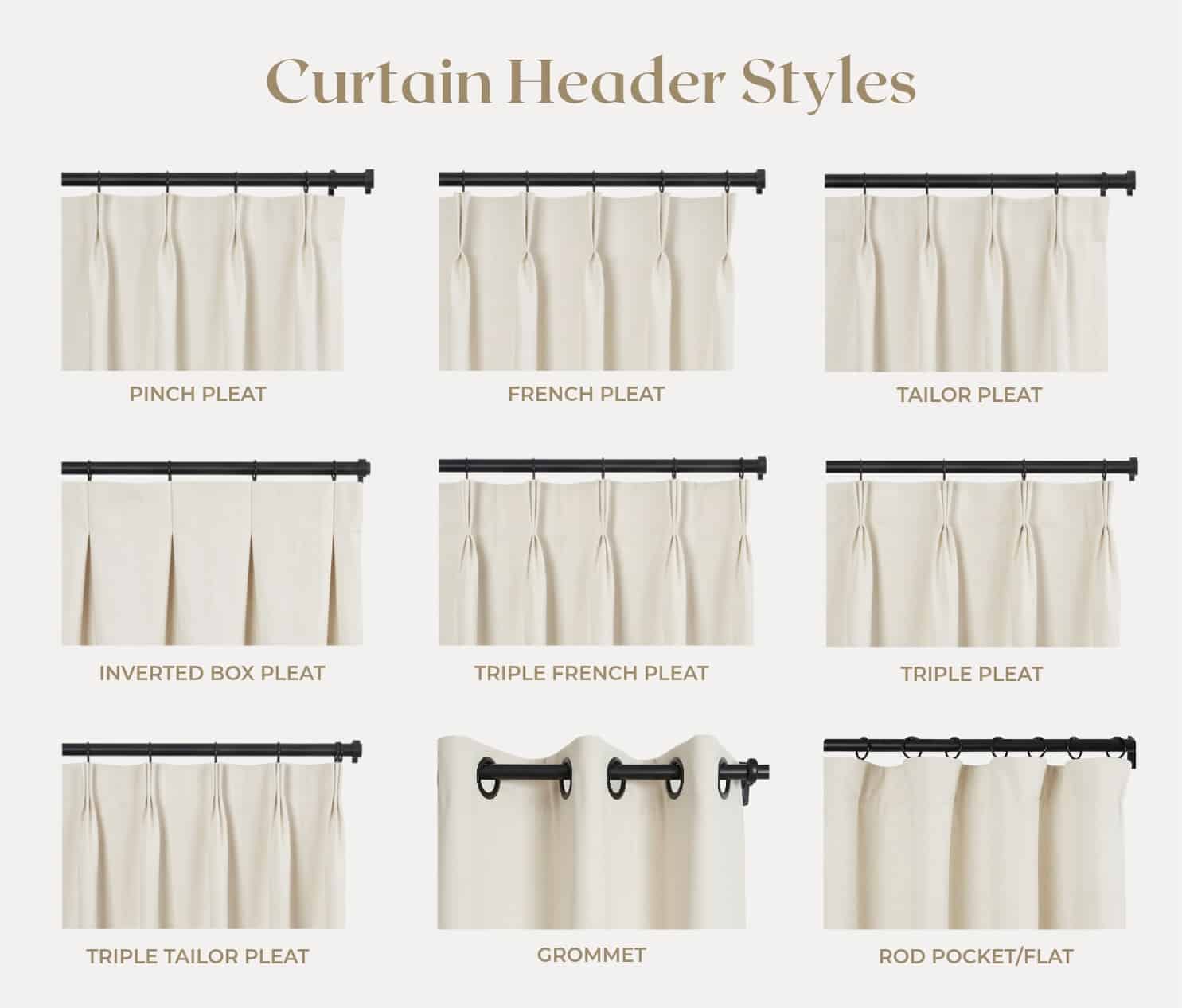
- Choose color and pattern with the room in mind. The lighter the curtain color and fabric, the larger and more open the space will feel. White, off-white, and soft neutrals are the safe, versatile choices for any nursery. If you want more drama, go for deeper or richer neutrals or even jewel tones. If you want pattern, subtle stripes or small-scale patterns work well. A bold floral or larger print can also create drama!
- Consider the window position. When choosing curtains, another key factor to consider is the direction the room faces. This will determine how much sun the space will receive as well as what time of day the room will receive maximum sunlight and heat. For east and south facing rooms, the decision for blackout curtains may be a given. Much of baby’s sleeping time will be during the day for naps, so keep this in mind. In addition to eliminating sunlight, all ambient lighting should be dimmed or turned off including any electronics that can create blue light rays.
What size nursery curtains should I order?
This is the question I get asked the most. It can be fairly complex, which is why so many of my clients get overwhelmed.
Start by measuring. You’ll need the following measurements:
#1. From the floor to the ceiling.
#2. The full width of the window from left to right.
#3. The space you have between the edge of the window and each corner.
- Determine the length: Take measurement #1. Subtract about 3-4 inches to allow for the hardware (you can go closer to the ceiling if your hardware will allow). If you want curtains that just brush the floor, stick with that number. If you prefer a puddled look, add back 3-4 inches in length. For example, in a room with a 96-inch floor-to-ceiling height, you would look for panels around 92 inches long. For a puddle, you could stay with 96 inches long. If you’re adding curtain rings, keep in mind that those will drop your curtains down by about an inch.
- Determine the hardware width. You’ll want your curtain rod to extend about 4-6 inches past the outer edge of your window frame. Use measurements from #2 above. If your window is 40 inches wide, add 4-6 inches to each side. If we add 6 inches to each side, that’s a total of 52 inches in width. This is your hardware width, NOT your curtain panel width. Check #3 above to make sure you have space to extend your curtain rod past the edges of the window. If you’re using finials, those will add extra width past the rod.
- Determine the curtain panel width. Here’s where things get tricky since this depends on the style of curtain you want. You always want to order your curtains wider than you think. If you’re getting flat rod-pocket curtains, double the hardware width you got from the previous step. That means if your hardware width is 52 inches, you’ll want your curtains to cover 104 inches. Split in half, that’s 52 inches for EACH curtain panel. If you’re buying pleated curtains, they often have that extra width built in, so make sure to read the product details carefully.
- Order long, then hem. Ready-made panels come in standard lengths, so you will likely need to have them tailored. When in doubt, order longer than you need. All they need is a simple bottom hem, which any local tailor can handle.
The best nursery blackout curtains: Readymade
Looking for custom blackout curtains? Scroll down! Shades of white, off-white, and neutrals are great and versatile choices for any nursery. Here are some of the ones I recommend most often.


1. White Linen Blackout Curtain | 2. Textured Blackout Curtain | 3. Sage Green Blackout Curtain | 4. Ivory Dot Blackout Curtain | 5. Checker Stripe Blackout Curtain | 6. White Blackout Curtain | 7. Natural Linen Blackout Curtain | 8. Bow Top Blackout Curtain | 9. Boho Stripe Blackout Curtain | 10. Blue Velvet Blackout Curtain | 11. Worn Velvet Blackout Curtain | 12. Rust Velvet Blackout Curtain
Here are even more of my favorite readymade blackout curtains:
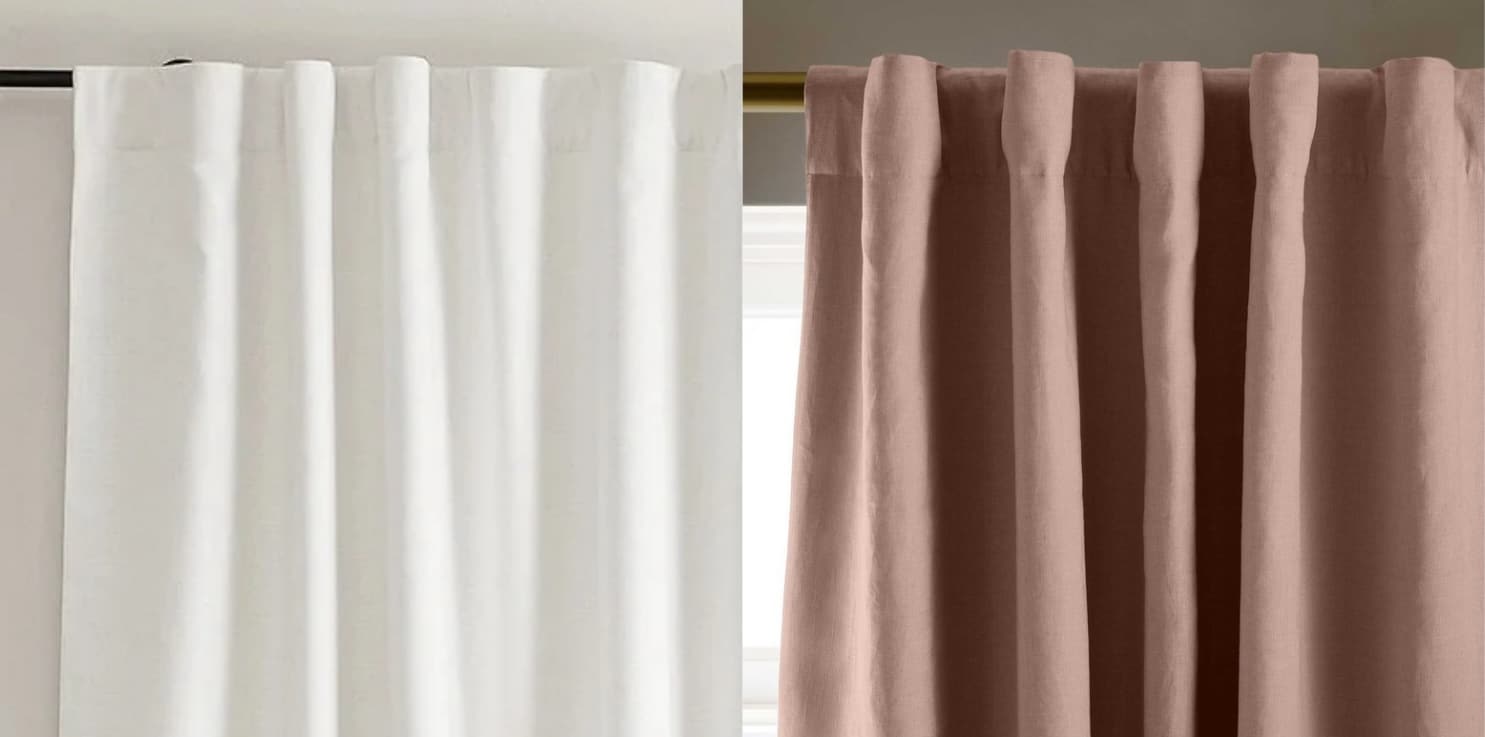
I have so many requests for solid color blackout curtains. The two above are both fantastic options for basic and affordable blackout curtains that still have a luxury feel. The Evelyn White Blackout Curtain is a cotton linen blend, and the Quince Rose Blackout Curtain is 100% European linen. They both give great texture, come in lots of great colors, and are both OEKO-TEX certified.

If you want a little more oomph but don’t want to go overboard, choose a simplistic and classic pattern. This minimal stripe curtain is soft and subtle, and depending on your hardware and other decor choices, can work in a variety of spaces. See how we used these curtains in this soft blue coastal nursery.

If you’re looking for something that’s more of a design statement, I love these Otterspace Floral Blackout Curtains. They were designed by a mom and neuroscientist and eliminate 100% of light for deeper, better sleep. This navy floral pattern is so fun, but they have some great neutrals as well. They also have a Total Blackout Curtain kit that you can add under any existing curtains for a fully sealed blackout.
The best nursery blackout curtains: Custom
If you have a little more wiggle room in your budget, these curtains below are customizable, so you can get the exact length and style you’re looking for:

1. Custom White Blackout Curtain | 2. Custom Gray Blackout Curtain | 3. Custom Mauve Velvet Blackout Curtain | 4. Custom Floral Blackout Curtain | 5. Custom Pleated Blue Blackout Curtain | 6. Custom Brown Pattern Blackout Curtain | 7. Custom Light Blue Blackout Curtain | 8. Custom Flower Blackout Curtain | 9. Custom Checker Blackout Curtain | 10. Custom Blush Blackout Curtain | 11. Custom Blue Stripe Blackout Curtain | 12. Custom Green Plaid Blackout Curtain
Choosing curtain hardware for your blackout curtains
The other big player is your hardware. Choose hardware that matches the overall style of your nursery. Many stores let you choose finials separately from the rod, and that is a great place to add a little personality.
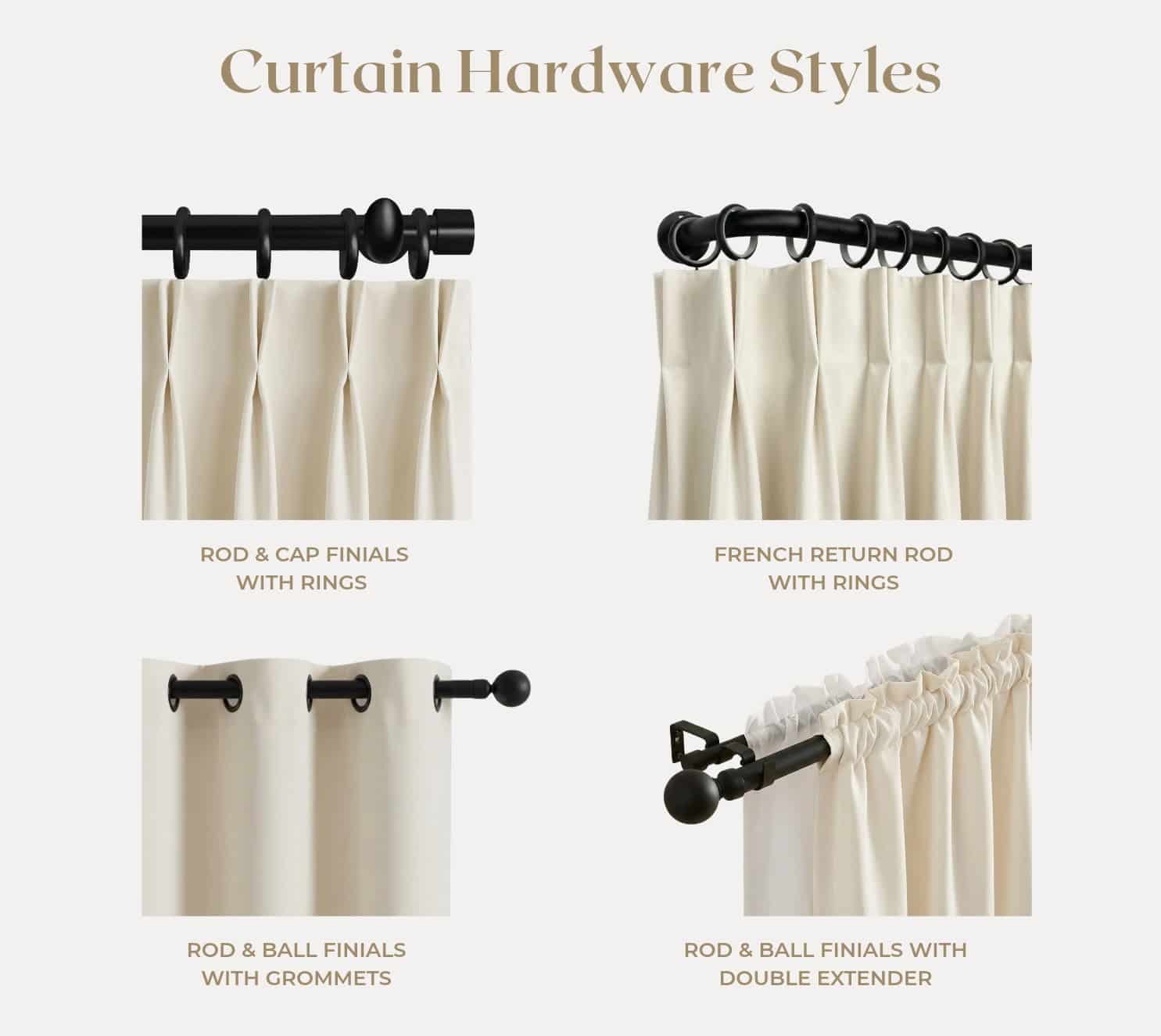
There are several types of curtain hardware to choose between:
- Rod + Finials. This is the standard curtain rod with finials attachments. It will also come with brackets for hanging. You can use it without rings for rod pocket styles, or with rings for pleated styles.
- French Return Hardware. This is a special type of curved rod that allows your curtain panels to return back to the wall. This type of hardware will give you more light protection around the edges! Use with or without rings depending on your panel style.
- Rod + Finials With Grommets. Grommets are sewn into the actual curtain panel, and can be used with curtain rod. Make sure you choose a rod that fits your grommet size and finish.
- Rod + Finials With Double Extender. If you want to do double layer drapery, you can do that with a double rod. This is a great option if you want to have sheer curtains underneath your blackout curtains for maximum flexibility. You can use this with or without rings.
Here are my favorite places to shop for both ready-made and custom curtain rods:
- Curtarra: great selection of hardware types in multiple finishes, including custom sizes!
- West Elm: lots of adjustable options and beautiful finials.
- Lux Holdups: this Etsy shop makes custom-length acrylic curtain rods, and they are gorgeous.
- Pottery Barn Teen: lots of options and a good selection of styles.
- Kwik Hang: this product is ingenious if you rent or know you will be moving soon and do not want to drill into the walls. These molding brackets do not look as polished because you cannot mount them high above the window, but they are functional and a perfect quick solution.

My hardware tips:
- Go sturdy. Blackout curtains are heavier than standard curtains, so do not buy a dinky rod, especially for a wide window. Choose a rod that is at least 1 inch in diameter. And when in doubt, add a center bracket for extra security.
- Use rings for a polished look. If you have rod-pocket curtains, you can hang them directly on the rod, but curtain rings look more polished and make it much easier to open and close the curtains. For a standard 50-inch panel, you will generally need 7 rings. I also have an in-depth post on how to use curtain rings.
- Skip the clips. Many curtain rings come with clips, and I don’t suggest using them. They don’t look good and are often not strong enough to hold a blackout curtain, which can be a safety issue in a nursery. Buy rings without clips or remove them, and use drapery pins to attach the curtain to the rings.
Curtain safety in a nursery
Safety is always part of the conversation when I design a nursery, and window treatments are no exception.
- Choose cordless shades. If you add a roller shade under your curtains, make sure it’s cordless. Cords near a crib are a real hazard, and there is no reason to take the risk.
- Keep the crib away from the window. Position the crib so your baby cannot reach the curtains, rod, or any hardware through the crib rails.
- Mind the tiebacks. If you use tiebacks or holdbacks, mount them high on the wall and out of reach, and avoid hanging cords, tassels or loose ties.
- Secure the rod. Heavy blackout panels put real weight on the rod and brackets. Anchor the brackets into studs or use heavy-duty wall anchors, and check that everything is secure once the curtains are up.
Good nursery blackout curtains will still work long term, which is why I love investing in high quality ones. Neutral blackout curtains carry right through the toddler years and into a big-kid room, a playroom, or a guest room, and they are especially useful for kids who nap and wake early. If you want to know more about nursery safety, check out these common nursery safety mistakes.
Need help with your nursery window treatments?
If you would like help pulling together your window treatments and the rest of the room, my Virtual Design service is a great way to get a custom plan for your nursery. You can also find all of my nursery design advice in my book, Your Perfect Nursery.
*This post contains affiliate links, but don’t worry, I only link products that I would 100% recommend!*


Hi there, great tips and advice. What do you suggest in addition to the curtains, which type of blinds or shades?
Hi Katie! It depends on what you’re going for. If you want the room to be fully blackout, then you can put a blackout shade under the curtains for even more light protection. If you want the option of some light coming in, you can add a non-blackout roller shade or roman shade underneath as well. The main thing to watch out for is cords. Choose a shade that’s cordless so there are no safety hazards!
Thanks for sharing the information about my ultimate guide to blackout curtains for the nursery.
This article gives detail about my ultimate guide to blackout curtains for the nursery. This article gives suggestions on I enjoyed reading while going through this article and this is the best link for gaining all the information about it.
Hi, thanks for sharing! I love the honeycomb jacquard curtains but see they are no longer available as I realize this post was from a few years ago. Is there something similar you could recommend please? Thank you!
Hi Amy! The only other jacquard curtains I know of off-hand are these from West Elm. I haven’t seen anything else with that honeycomb pattern that comes in a blackout.